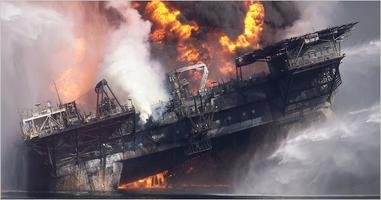
On April 20, 2010, a blowout, explosion, and fire occurred aboard the
Deepwater Horizon,
an offshore drilling rig, engaged in drilling activities on the
“Macondo Well” off the coast of Louisiana. These events led to eleven
deaths, dozens of injuries, and a massive discharge of oil into the Gulf
of Mexico that continued for nearly three months.
[1]
Hundreds
of lawsuits with thousands of claimants involving British Petroleum
(BP) were filed. On August 10, 2010, all federal lawsuits related to
economic and property damages were centralized in (excluding securities
suits) in the US DISTRICT COURT for the EASTERN DISTRICT OF LOUISIANA.
The official name of the case:
In Re: Oil Spill by the Oil Rig “Deepwater Horizon” in the Gulf of Mexico, on April 20, 2010 (If
you have questions regarding eligibility or other details about the
settlement, use the contact form at the end of this article.)
Settlement Agreement Approved by Judge Barbier

Judge Barbier
On December 21, 2012, US District Court Judge Barbier issued an
Order approving a settlement
agreement, applicable to most businesses in the covered area. The BP
Settlement Program applies to all types of businesses, though many that
may have claims have not pursued them. The settlement changed who
qualifies for economic relief, and how claims are evaluated and
compensated for direct or indirect economic losses in 2010.
THE DEEPWATER HORIZON BP OIL SETTLEMENT PROGRAM
The
Deepwater Horizon Court-supervised Settlement Program is
the court-run class action settlement program designed to compensate
for losses resulting from the April 20, 2010 oil spill. The Settlement
Program provides objective formulas to evaluate and compensate
businesses and professionals for their direct or indirect economic
losses incurred after the spill. (
For specific questions about the Settlement Program, use the contact form at the end of this article.)
THE BASIC QUALIFICATION REQUIREMENTS
Requirement 1: A business in the covered states and counties.
Requirement
2: In business during the relevant time frames. (The time frames may
vary with the provisions for start-ups and failed businesses)
The
1,200+ page settlement agreement defines many ways to qualify, based
principally on geographic location and industry. Geography is defined
by zones. There are varying financial calculations for qualification
within each zone.
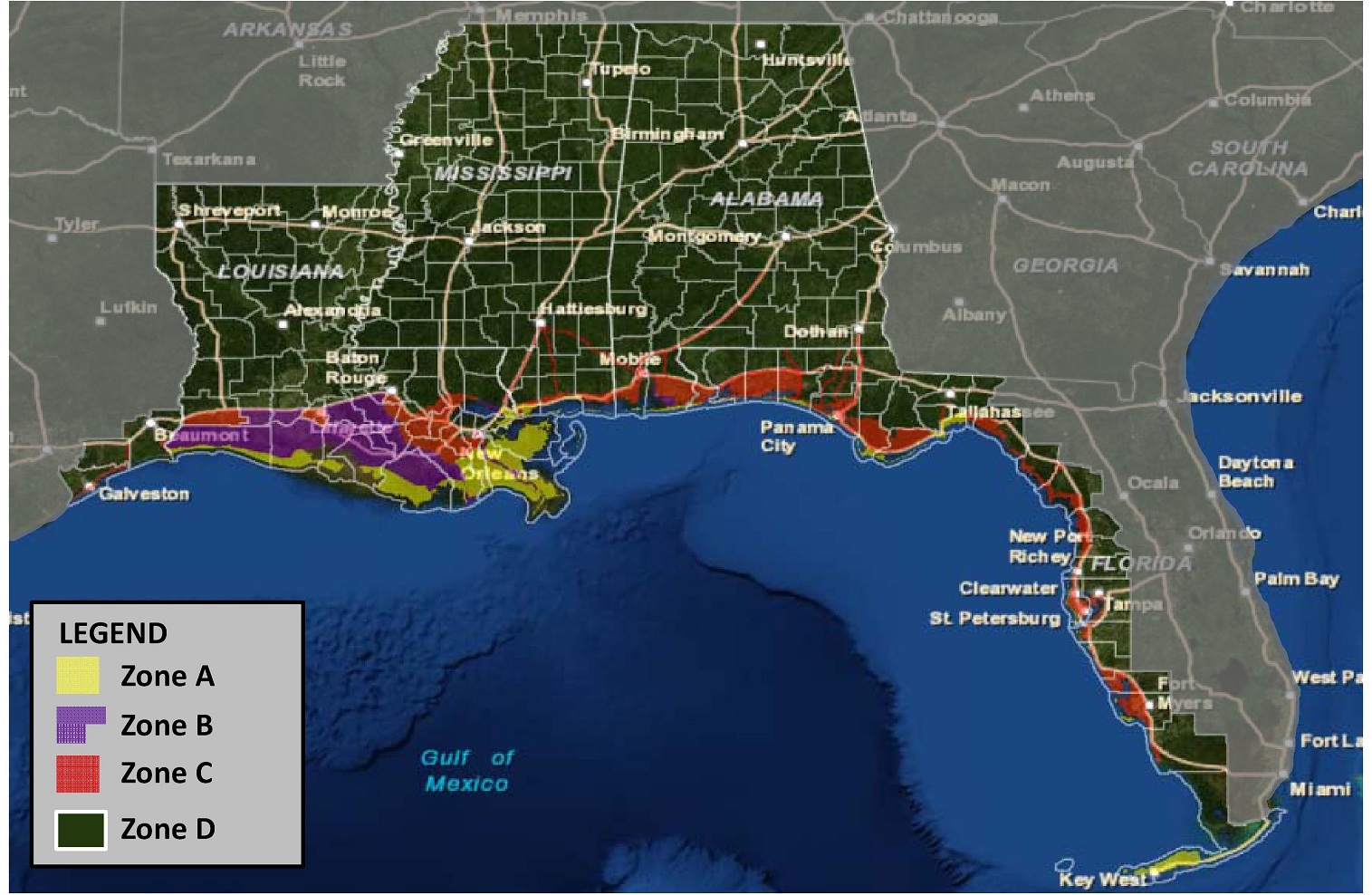
GEOGRAPHY COVERED BY THE BP SETTLEMENT AGREEMENT

Geography Covered by BP Oil Settlement Agreement
The Settlement covers Louisiana, Mississippi, Alabama, and certain coastal counties in eastern Texas and western Florida,
[2] and
specified adjacent Gulf waters and bays. Generally, to be eligible,
businesses must have conducted activities in the area during the period
between April 20, 2010 and April 16, 2012.
EACH ZONE HAS DIFFERENT QUALIFYING REQUIREMENTS
In
Zone A, largely comprised of barrier islands, there is no financial
test to meet. Most businesses and individuals in Zone A automatically
qualify. Zone C varies anywhere from 1 mile to approximately 20 miles
inland. Zone D may be up to 325 miles inland. In Zones C and D the
qualification calculations are different. While the entire states of
Louisiana, Mississippi and Alabama are included, there are specific
counties in Texas and Florida.
[3]
The agreement is nuanced with many exceptions.
[4] Given the complexity, claimants are well advised to consult with an attorney. This may begin with an
Authority to Represent.
ELIGIBLE BUSINESS NEED NOT BE TIED TO TOURISM
Almost any business
[5] located
in a Florida Gulf Coast county, (from the panhandle to the Keys) the
states of Alabama, Mississippi, Louisiana and select counties in TX, may
be eligible. The business need not be tied to tourism, seafood or the
Gulf in order to qualify. For businesses with multiple locations, there
is a specific provision in the settlement agreement for “multi-facility
entities.”
[6]
PROOF THAT BUSINESS LOSSES WERE CAUSED BY THE BP SPILL UNNEEDED
There is no need to show that the oil spill itself was related to damages.
[7] The objective economic loss formulas do not require the traditional legal “cause”.
[8]
NO CAP ON THE AMOUNT OF MONEY TO BE PAID IN CLAIMS
The
amount of claims to be paid under the settlement agreement are not
capped. Judge Barbier held a fairness hearing on November 8, 2012, and
issued final approval on December 21, 2012. With that final approval BP
became bound to pay all valid claims as determined by the settlement.
[9]
CLAIMS NOT FILED BY THE DEADLINE ARE LOST
Claims
must be filed prior to the deadline of April 22, 2014. Any claim
covered by the settlement agreement not filed by that date, barring an
extension by the Court, will forever be barred.
SETTLEMENT EXCLUDES CERTAIN INDUSTRIES
Most industries are eligible under the settlement. However, there are excluded industries:
- certain financial institutions
- gaming businesses (casinos, etc.)
- insurance entities, investment funds and financial vehicles
- defense contractors
- governmental entities
- any entity selling or marketing BP-branded fuel
- certain oil and gas concerns
- real estate developers
- businesses and individuals who released their claims through the GCCF.[10]
BUSINESSES THAT WERE DOWN FOR ALL OR PART OF 2010 MAY BE ELIGIBLE
The settlement contains provisions that may cover businesses that were not operational through all of 2010.
[11] The
system was created this way, given the difficulty of proving the
relationship between business issues and the spill. The agreement is
designed to take into account both the direct effects of the spill and
indirect effects that would be hard for many businesses to prove by a
traditional legal process.
THE NEED FOR PROFESSIONAL REVIEW OF FINANCIAL INFORMATION

Economic Recovery Group: A Business and Consumer Law Firm
Because
of the complexity of the agreement, a cursory review of financial
statements by business owners may result in the conclusion that they
cannot participate. When a team of lawyers, CPA s and Chartered
Financial Analysts review the same materials often six and seven-figure
claims are identified. An appropriate team of professionals is
advisable to determine the existence and value of any possible claim.
THE EVALUATION PROCESS AND CONTINGENCY FEES
A professional evaluation begins with an
authorization
to a law firm to represent the client’s interests in the BP Settlement
Process. Once a client provides monthly profit-and-loss statements and
related tax returns for the years 2007 through 2011,
[12] that information is evaluated. The evaluation ideally includes both financial and legal professionals.
The
first step is to determine if a valid claim exists. When the work is
done for the client on a contingency basis, should the team determine no
claim exists, the client will have no costs. If the evaluation
indicates a valid claim, further work will be done to prepare and file
the claim. In the event of an unsuccessful claim, the client owes
nothing. For a successful claim, an agreed upon percentage of the paid
claim will determine the professional fees.
 TIME FRAMES INVOLVED IN THE CLAIM PROCESS
When
an evaluation indicates a valid claim, the Settlement Program requires
final documents. Upon receipt and preparation of the final documents,
the claim is submitted to the court’s Claims Administrator. The
administrator makes a finding and issues a Letter of Determination
within one to two months. Currently payments are being made within four
to six months following the Letter of Determination.
The Claims
Administrator is expecting more than 800,000 claims. Claims are being
handled on a first in/first out basis. As more claims are filed, the
time line for payment may extend. With that in mind, it is better to
file sooner rather than later.
BENEFITS OF LEGAL COUNSEL
This
settlement is overseen by the United States Federal District Court in
New Orleans. An individual is free to represent himself. This is called
“pro se.” Without the assistance of legal and financial professionals,
the risk of failing to maximize the value of a claim exists. This is a
legal proceeding and the general rule of court is that “pro se”
litigants are required to follow the same rules as those represented by
counsel.
A recent Claims Administrator report highlighted the
significant number of claims being denied outright or returned for
deficiencies because they were prepared by individuals or inexperienced
and unqualified non-lawyer para-professionals.
[13]
Having
an attorney also addresses many concerns about the confidentiality of
financial information. Attorneys are bound by attorney-client privilege
and confidentiality requirements.
[14]
A discussion of issues in making a decision to file a claim can be found at:
Considerations in Filing a BP Oil Spill Claim.
INDIVIDUAL QUESTIONS REGARDING THE BP OIL SPILL SETTLEMENT PROGRAM
If you have a particular question regarding the settlement program, feel free to contact me ...
High five!
Dale Suslick
Sanibel's Right Choice Realtor
P.S. Sanibel Captiva Pine Island Lehigh Acres Home Values up!
Is it the right time to sell your home? Hand crafted valuations FREE through 11/9/13.
Home
values have dramatically increased in the last 12 months freeing 3.2
Million people from negative equity, many have been waiting to sell.
Find out where you stand before they flood the market!